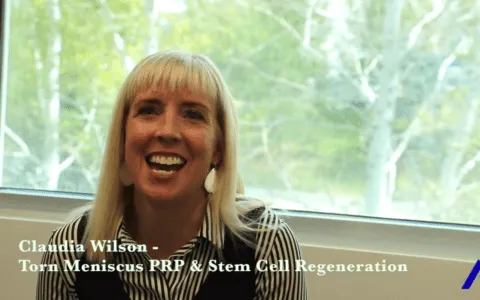
Learning From Someone Else's Experience
When Claudia injured her meniscus, she had already seen two different surgical outcomes firsthand. Her husband had undergone two meniscus surgeries—one was successful, while the other created problems that lasted far longer than the original injury.
That experience changed how she approached her own treatment.
"I decided that rather than going the surgery route first and having less of a meniscus to work with, I would try PRP and stem cell regeneration to have a full meniscus to work with."
— Claudia
Choosing to Preserve Instead of Remove
One of the challenges with partial meniscectomy is that damaged tissue is removed to relieve symptoms. While surgery is appropriate in certain situations, removing meniscal tissue can reduce the knee's natural shock absorption and may increase stress on the joint over time.
Because Claudia's injury was an appropriate candidate for regenerative treatment, she chose to pursue PRP and orthobiologic therapy before considering surgery.
Why This Matters
Whenever possible, preserving healthy meniscal tissue is preferable to removing it. The right treatment depends on the tear's location, size, stability, and overall condition of the knee.
Returning to the Activities She Loves
Following treatment, Claudia returned to the activities that mattered most to her—including challenging hikes and high-intensity workouts—without needing surgery.
"I had faith in him and the procedures."
— Claudia
Every Meniscus Tear Is Different
Not every meniscus tear can or should be treated the same way. The location of the tear, tissue quality, blood supply, imaging findings, activity level, and patient goals all influence the best treatment plan.
At Albano Clinic, every patient receives an individualized evaluation to determine whether regenerative treatment, rehabilitation, surgery, or a combination of approaches offers the best opportunity for long-term knee health.
Clinical Insight
Claudia's story highlights an important principle of regenerative orthopedics: when preserving tissue is a safe and appropriate option, it may help patients maintain more of their knee's natural structure while returning to the activities they enjoy.