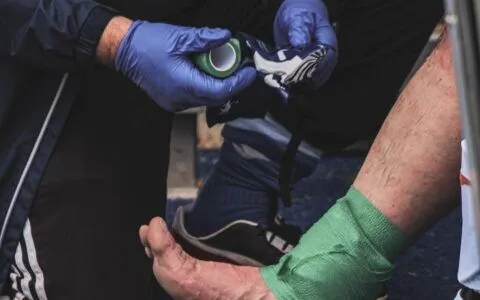
When Recovery Stalls
Most injuries improve with time, rehabilitation, and appropriate treatment. Others linger for months, leaving patients with persistent pain, weakness, or repeated flare-ups. For these situations, peptide therapy has become an increasingly discussed option, particularly BPC-157 and TB-500.
Although both peptides have attracted significant interest, it's important to distinguish promising research from proven clinical evidence.
BPC-157: Localized Tissue Repair
BPC-157 (Body Protection Compound-157) is a synthetic peptide originally derived from a protective protein found in gastric juice. Animal studies have investigated its ability to promote tissue repair, stimulate angiogenesis (new blood vessel formation), reduce localized inflammation, support gastrointestinal healing, and improve tendon and ligament recovery.
One notable animal study published in the Journal of Orthopaedic Research demonstrated significantly improved tendon-to-bone healing following Achilles tendon injury—even when corticosteroids, which normally impair healing, were present.
Research Limitation
Most evidence supporting BPC-157 comes from animal studies. Human clinical trials remain limited, so treatment expectations should remain realistic.
TB-500: Systemic Recovery Support
TB-500 is a synthetic version of Thymosin Beta-4, a naturally occurring peptide involved in cell migration and tissue regeneration. Unlike BPC-157, which appears to have more localized effects, TB-500 has been studied for broader, systemic support throughout the body.
- Supporting muscle recovery
- Promoting ligament healing
- Improving flexibility and mobility
- Reducing scar tissue formation
- Supporting cardiovascular recovery
- Supporting neurological healing
Clinical Insight
Because TB-500 may have broader systemic effects, some practitioners consider it for patients with multiple injuries or more widespread tissue involvement.
Why Some Providers Combine Them
Some clinicians combine BPC-157 and TB-500 because their proposed mechanisms appear complementary. BPC-157 may provide more localized support around injured tissues, while TB-500 may promote broader tissue recovery throughout the body.
Although the theoretical rationale is compelling, direct human clinical trials evaluating the combination remain limited. Treatment decisions should always be individualized.
Safety and Expectations
Neither BPC-157 nor TB-500 has been approved by the FDA for human use. Long-term human safety data remains limited, making honest patient education especially important.
- Fatigue
- Headaches
- Nausea
- Injection site irritation
Important Note
Reported side effects are generally mild, but long-term safety has not been fully established. Patients should understand both the potential benefits and current evidence limitations.
Peptides Are Part of a Bigger Picture
Recovery timelines vary widely. Some patients notice improvement within weeks, while others experience slower progress or no measurable benefit. Peptides should be viewed as one component of a comprehensive treatment strategy—not a replacement for physical therapy, regenerative orthobiologic procedures, or appropriate rehabilitation.
"The goal isn't to chase miracle treatments—it's to build the best possible healing environment using the tools that fit each individual patient."
— Dr. Joseph Albano
Our Approach
For patients whose recovery has plateaued despite conventional treatment, peptide therapy may be an appropriate discussion. At Albano Clinic, only pharmaceutical-grade compounded peptides are considered, and every recommendation includes an honest conversation about both the available evidence and its current limitations.